Product
Roller blinds
The workhorse of every Featherbrooke home — a clean fabric panel, made to measure, that does blockout in the nursery and sunscreen in the living room without ever fighting the view of the garden.
The everyday answer for a family house
A roller blind is a fabric panel on an aluminium tube — spring, chain or motor driven — that sits close to the glass and disappears into a neat roll when you don't need it. Across a Featherbrooke floor plan with a dozen or more openings, from the entrance hall down to the scullery window, that simplicity is the whole appeal: one clean line, made to fit each opening exactly, with a fabric chosen for what that particular room actually needs.
Fabric types — the real decision
The tube and mechanism are almost the easy part. The fabric is what decides whether the blind does its job.
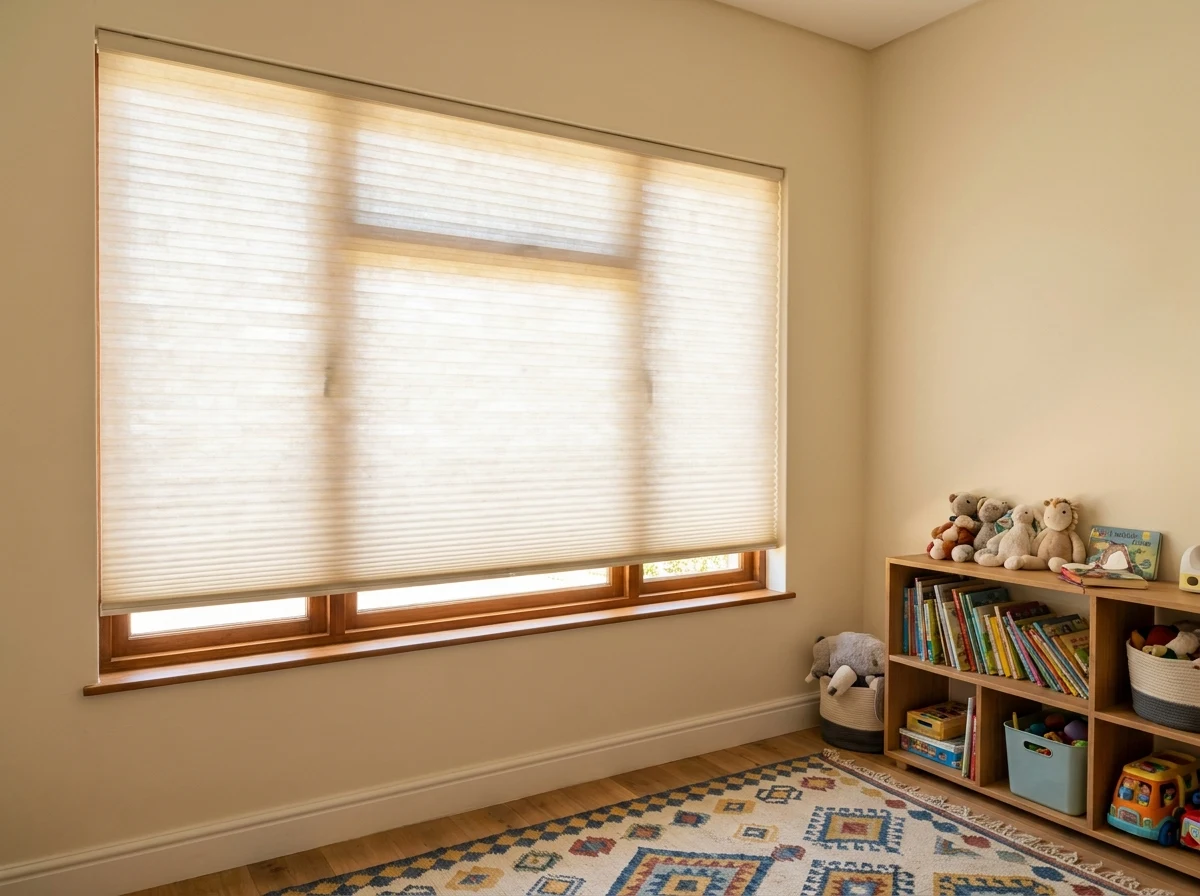
- Blockout — a total light stop, and the right call for nurseries, kids' rooms and main bedrooms that need to stay dark past a highveld summer sunrise. It also adds a useful insulating layer against the afternoon heat and the frosty winter mornings.
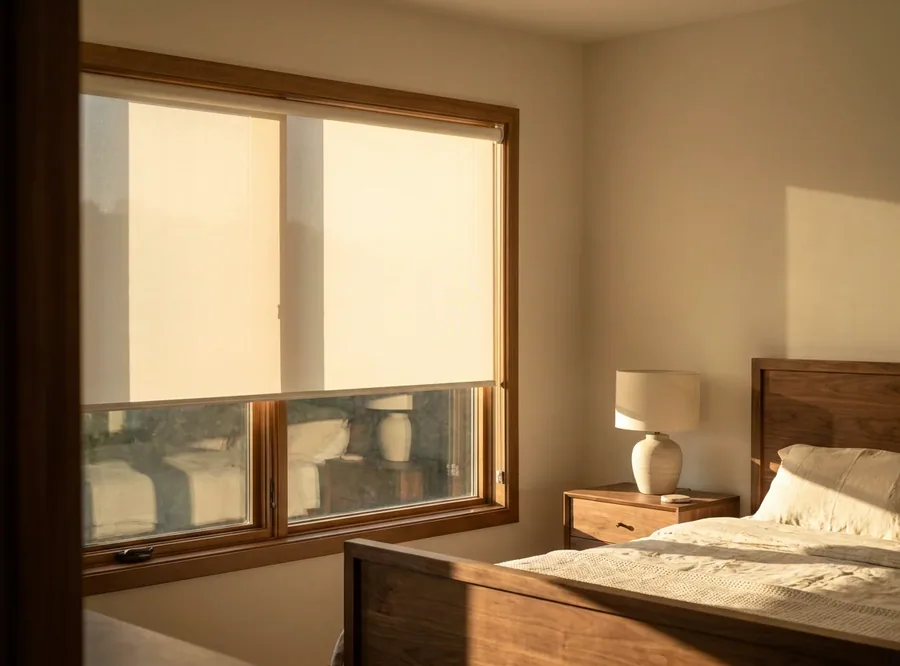
- Sunscreen (openness factor 3%, 5%, 10%) — a mesh weave that cuts glare and UV while keeping the view of the garden or the estate's greenbelt. The lower the percentage, the more heat and glare it blocks and the less see-through it is; 3–5% is the standard for view-preserving sun control on the big sliding doors most Featherbrooke living rooms are built around. Bear in mind it gives daytime privacy but reverses at night — lights on inside means you're visible from the garden — so it's usually paired with a blockout option for bedrooms.
- Light-filtering / translucent — softens the light and gives full privacy, at the cost of the view. Useful for bathroom or street-facing windows low in the house, less so for the room you built the patio doors for.
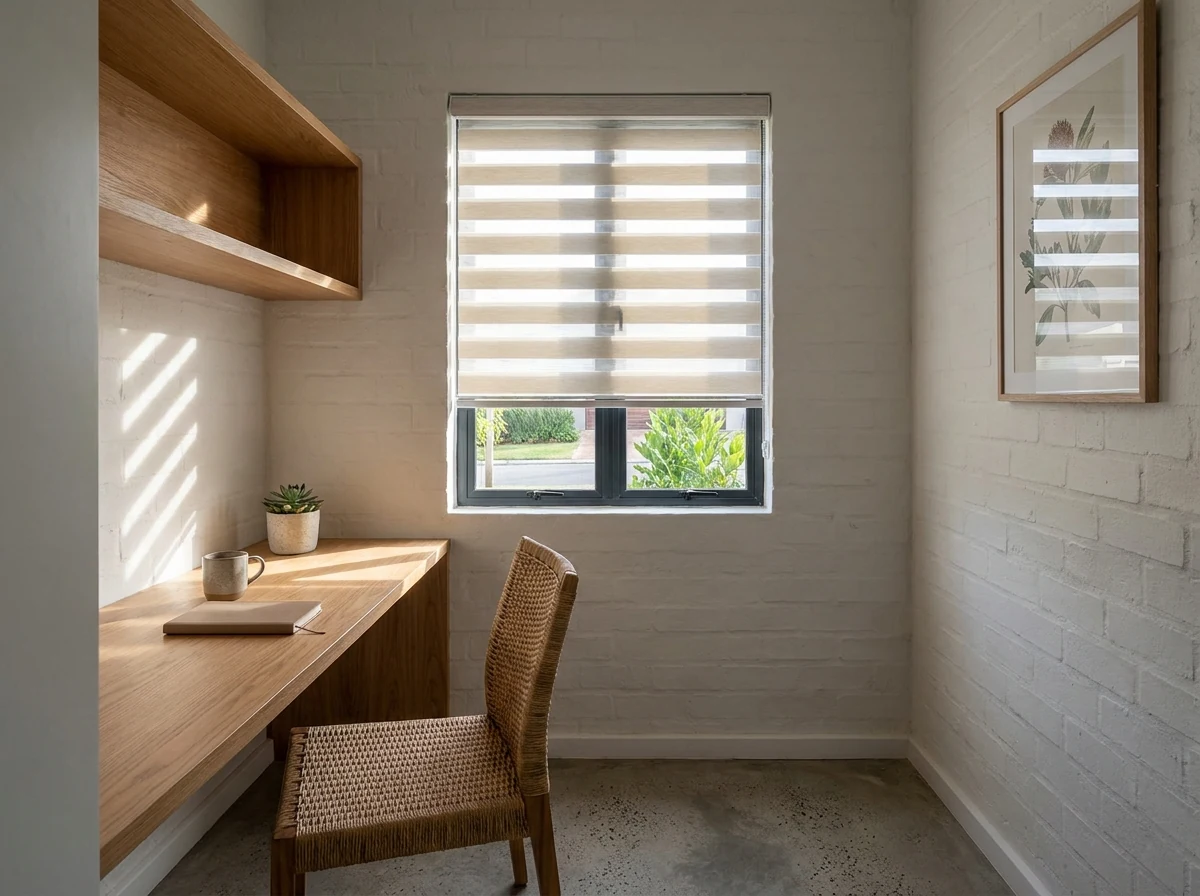
The classic Featherbrooke answer for a west-facing main bedroom is a double roller — blockout and sunscreen on one bracket — so the room can go from "open to the garden" to "properly dark" without two separate window treatments competing for the same frame.
Built for family living
Chain control needs a tensioner anchoring the loop to the wall as standard — non-negotiable with young kids or pets around. Spring-assist and motorised options remove the chain altogether; motorised is worth it wherever a blind sits above a stairwell void, a double-volume entrance hall, or simply where you'd rather not walk across the room every evening. Cassette or pelmet valances hide the tube and can be colour-matched to your frames for a finished, architectural look. Single blinds run to roughly 3m of fabric width before needing a central join line or a motorised, linked pair — worth flagging if your living area opens onto the patio through a very wide stacking door.
Where it works best on an estate home
Roller blinds suit exactly the kind of glass Featherbrooke homes are built around: generous openings, big sliding doors, budgets that stretch from entry fabrics to premium wide-width and motorised systems, and an easy wipe-clean life with kids and pets in the house. Where they lose is on very wide unbroken spans without a join, and on more traditional rooms where a timber venetian usually suits the room better.
Roller blinds go up right across our patch — blockout and sunscreen on golf-estate sliding doors in Ruimsig and Eagle Canyon Golf Estate, and on renovated family homes in Northcliff and Wilropark.